15 Jun 2026
The Integration of Progressive Accumulations with Real-Time Interactions Across Handheld Gaming Applications
Developers have combined progressive accumulation mechanics with real-time interaction systems in handheld gaming applications for several years, creating experiences where player progress builds continuously while participants engage simultaneously across networks. Progressive accumulations refer to systems that track and compound resources, levels, or achievements over extended periods, whereas real-time interactions enable immediate responses among users connected through mobile platforms. Data from industry reports shows these elements appear together in titles across action, strategy, and simulation genres on devices running iOS and Android operating systems.
Core Components of Progressive Systems
Progressive accumulations operate through persistent data storage that updates player states even when applications remain inactive, with servers recording incremental changes such as resource collection or skill development. Handheld games employ cloud-based backends to maintain these records, allowing users to resume sessions with compounded advancements intact. Research from academic institutions indicates synchronization protocols prevent data loss during network transitions, which supports uninterrupted accumulation across multiple devices.
Examples include games where base construction advances through timed upgrades that continue offline, while player inventories expand via collected items. These mechanics draw from established patterns in massively multiplayer online formats adapted for portable hardware with limited processing power.
Real-Time Interaction Frameworks
Real-time interactions rely on low-latency networking that transmits player actions to connected sessions within milliseconds, often using WebSocket protocols or dedicated game servers. Handheld applications integrate these features through matchmaking algorithms that pair users based on skill metrics or geographic proximity. Observers note that June 2026 saw increased adoption of edge computing nodes, which reduced latency in regions with expanding 5G infrastructure.
Applications in this category frequently incorporate live events where participants compete or cooperate in shared environments, with outcomes affecting accumulated progress directly. Such systems require robust error handling to manage disconnections without resetting accumulated values.
Technical Integration Methods
Integration occurs when game engines link accumulation databases to real-time event handlers, so actions in live sessions modify stored progress immediately. Developers use application programming interfaces to bridge these components, ensuring that a completed challenge in a multiplayer match adds to a user's long-term totals without delay. Studies conducted by European research consortia reveal that modular architecture allows independent scaling of each system while maintaining data consistency.
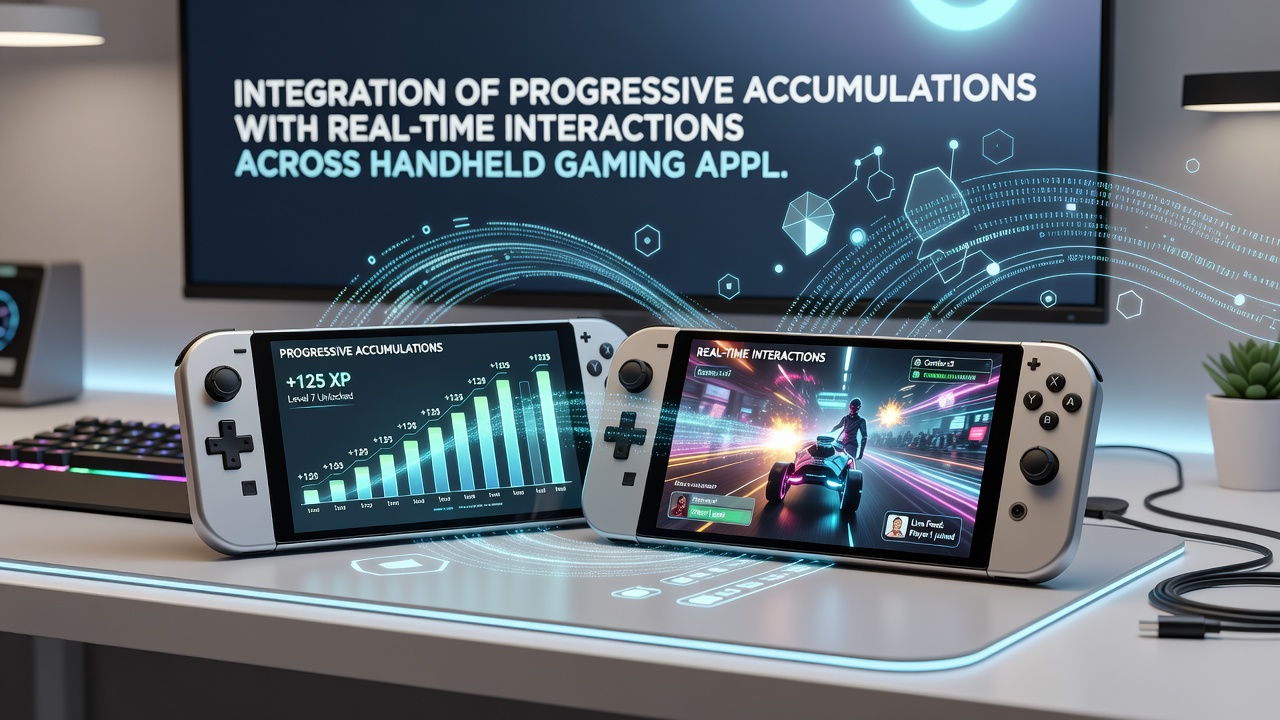
Security measures include encrypted transmissions and validation checks that confirm legitimate activity before updating records. This approach addresses vulnerabilities that arise when real-time inputs influence persistent states, particularly in environments with variable connection quality.
Market Adoption Patterns
Industry associations tracking global mobile entertainment report steady growth in titles that merge these features, with downloads concentrated in markets across North America, Asia-Pacific, and parts of South America. Figures from government statistical agencies in Australia indicate rising participation rates among users aged 18 to 35 through mid-2026, driven by improved device capabilities and expanded broadband access. Developers release updates that refine synchronization to handle larger player bases without performance degradation.
One documented case involves a strategy title where territorial control accumulated over weeks intersects with scheduled live raids, resulting in shifts to player standings that carry forward into subsequent sessions. Such designs encourage repeated engagement while preserving continuity across both solo and group activities.
Challenges in Implementation
Balancing computational demands on handheld hardware with server-side processing remains an ongoing consideration, as excessive real-time calculations can drain battery reserves or strain memory. Regulatory bodies in Canada have examined data handling practices in these applications to ensure compliance with privacy standards, prompting developers to adopt clearer consent mechanisms for cross-session tracking. Solutions often involve client-side prediction algorithms that simulate outcomes locally before confirming with central servers.
Network variability across regions further complicates consistent delivery, leading teams to implement adaptive quality settings that adjust interaction frequency based on detected conditions.
Future Development Directions
Continued advancement depends on refinements in artificial intelligence for matchmaking and predictive accumulation modeling, alongside hardware improvements that support higher fidelity graphics during live exchanges. Reports from trade organizations highlight collaborative efforts among studios to standardize certain protocols, which could streamline integration for smaller development teams. These trends point toward broader accessibility as infrastructure expands in emerging markets.
Conclusion
The combination of progressive accumulations and real-time interactions has produced distinct gameplay structures in handheld applications, supported by evolving technical frameworks and market data. Continued observation of implementation practices across different regions provides insight into how these elements coexist within portable gaming ecosystems.