7 Aug 2026
Shifting Player Engagement Patterns Through Layered Incentive Designs in Digital Multi-Table Card Simulations
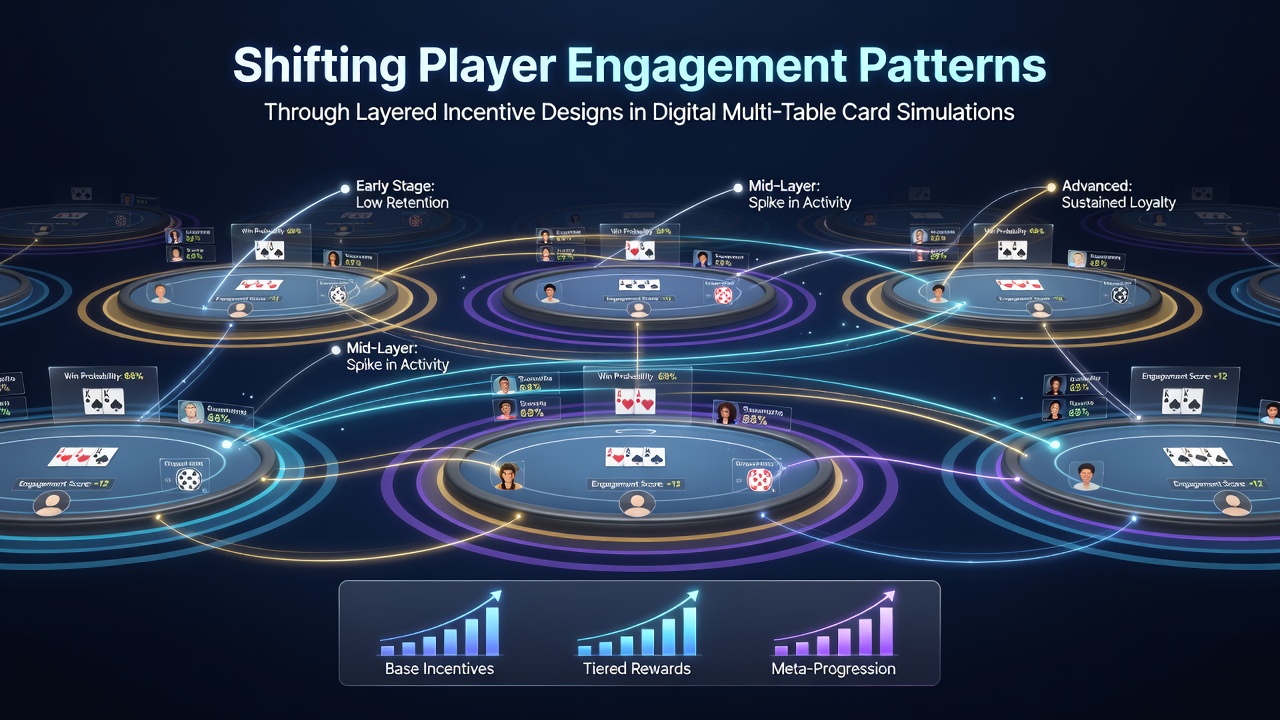
Digital multi-table card simulations have seen measurable changes in how operators structure rewards to maintain participation across poker, blackjack, and related variants. Platforms now combine entry-level login bonuses with progressive achievement systems and dynamic table-stake multipliers that adjust based on session length and table count. Data from industry tracking services show these combinations correlate with longer average play sessions in markets where mobile access expanded between 2024 and 2026.
Core Components of Layered Incentive Structures
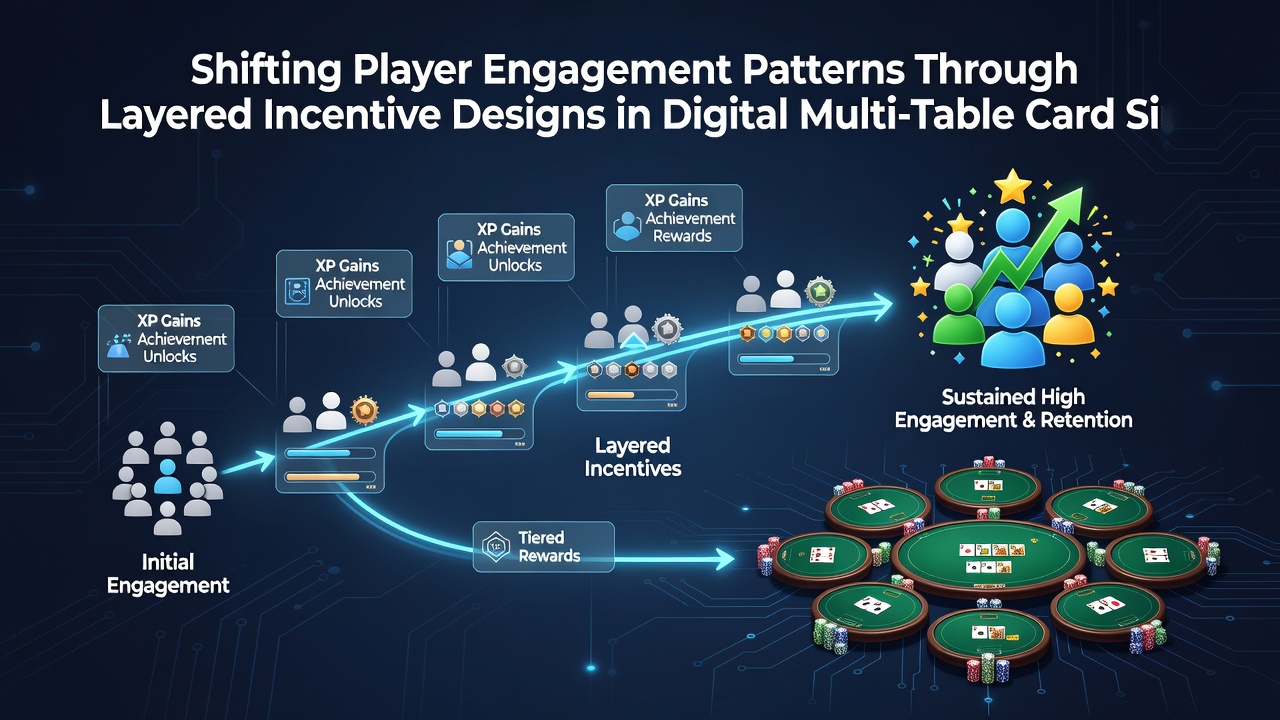
Operators typically deploy three distinct reward tiers that activate sequentially. The first tier consists of time-based credits awarded after a set number of hands or tables opened, while the second tier introduces milestone badges tied to specific win-rate thresholds or consecutive sessions without early exits. The third tier unlocks personalized multipliers that scale with the number of simultaneous tables a player maintains, often reaching 1.5x or 2x credit values once four or more tables run concurrently. Researchers at academic gaming labs note that this sequencing creates a progression loop where players who reach the highest tier tend to sustain activity across additional weeks compared with those limited to single-tier rewards.
Integration with real-time table analytics further refines these layers. When simulation software detects a drop in table count during peak hours, it can trigger an immediate micro-bonus visible only to that account, prompting the user to open another table rather than close existing ones. Figures released by the Canadian Gaming Association in its 2025 annual review indicate that platforms adopting this responsive layering recorded a 14 percent rise in concurrent table usage during evening windows.
Observed Changes in Participation Metrics
Engagement data collected through August 2026 reveal distinct patterns. Players who previously concentrated on one or two tables now average 3.2 tables per session in markets with mature incentive systems, according to aggregated platform telemetry. Retention curves show a slower decay rate after the first week when layered rewards are present, with the steepest drop-off occurring only after day 14 rather than day 7. This extension appears linked to the visibility of upcoming tier thresholds displayed on-screen during active play.
Geographic variation also surfaces in the same datasets. European operators report higher uptake of achievement-badge layers among users aged 25–34, whereas North American platforms see stronger response to stake-multiplier tiers among users aged 35–44. These differences align with separate demographic studies published by the Institute for Gaming Research at the University of Nevada, which tracked voluntary survey responses from over 12,000 simulation users across both regions.
Technical Implementation and Platform Adjustments
Behind the scenes, simulation engines now embed incentive logic directly into table-matching algorithms. Rather than random seat assignment, the system factors in a player’s current reward tier and the number of open tables before placing them, which reduces friction when users attempt to reach higher incentive thresholds. This adjustment coincided with a documented increase in average session duration from 47 minutes to 61 minutes on platforms that updated their matching code during the first half of 2026.
Regulatory filings in several jurisdictions further illustrate the shift. In jurisdictions where operators must disclose bonus structures, the proportion of total player rewards allocated to layered, performance-based incentives rose from 28 percent in 2024 to 41 percent by mid-2026. Observers tracking these filings note that the change reflects operator responses to telemetry showing greater stickiness when rewards scale with table count rather than fixed deposit matches alone.
Conclusion
Layered incentive designs continue to reshape how participants interact with digital multi-table card simulations. The combination of sequential tiers, responsive micro-bonuses, and table-count multipliers produces measurable extensions in session length and retention windows across multiple markets. As platforms refine these systems through ongoing data collection, the patterns observed through August 2026 suggest sustained evolution in engagement metrics tied directly to the structure and visibility of rewards.