17 Aug 2026
Mapping User Progression Paths in Non-Deposit Digital Environments Featuring Poker Variants, Wheel Games, and Progressive Prize Features
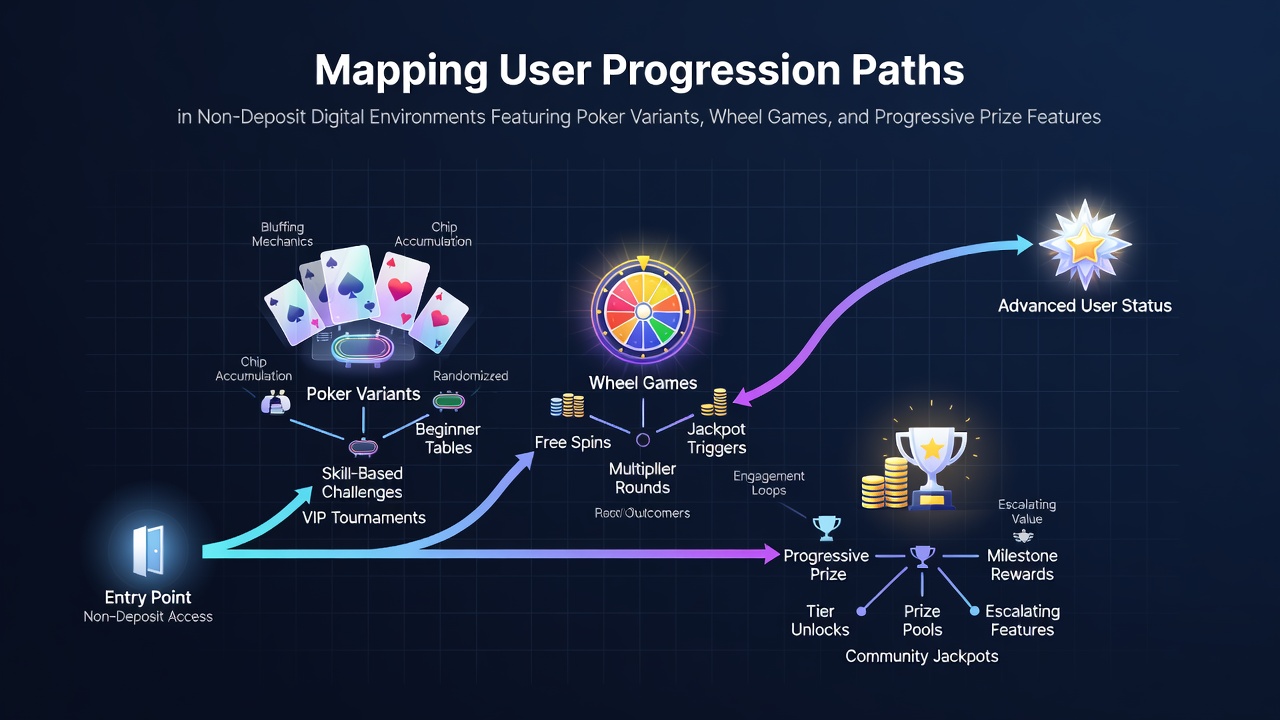
Platforms that offer non-deposit digital environments track how users move through poker variants, wheel games, and progressive prize features by collecting behavioral data points such as session duration, choice sequences, and achievement unlocks. These systems create detailed maps of player advancement without requiring financial deposits, relying instead on free credit allocations and virtual reward structures that mirror paid environments. Observers note that such tracking helps operators refine engagement loops while maintaining compliance with regional access rules that govern free-to-play formats.
Core Components of Progression Mapping
Researchers have documented that progression mapping begins with baseline metrics including login frequency, game selection order, and time spent on specific variants like Texas Hold'em or Omaha poker tables. Data aggregation tools then layer in wheel game interactions, where users spin digital wheels for bonus multipliers or entry tickets into progressive pools. This integration allows platforms to identify patterns such as users who start with poker hands before shifting to wheel mechanics, and those patterns often correlate with longer retention windows according to studies from the Alcohol and Gaming Commission of Ontario.
Poker Variant Pathways and User Flow
Poker variants within these environments typically follow tiered structures where beginners unlock table stakes or tournament entries after completing introductory hands. Mapping reveals that many users progress from single-table sit-and-gos to multi-table formats once they accumulate virtual chips through consistent play, while others remain in casual ring games. Wheel games frequently serve as interstitial features between poker rounds, offering quick progression boosts that feed into larger progressive prize accumulations. Figures from the Alcohol and Gaming Commission of Ontario released in August 2026 indicated steady growth in free-play session volumes across these combined formats.
Wheel Game Integration and Prize Mechanics
Wheel games contribute distinct data streams to progression maps because their outcomes directly influence access to progressive prize features. Users who trigger bonus wheels after poker wins often receive tokens that accelerate their position in jackpot leaderboards, creating observable feedback loops. Platforms log these sequences to predict when players might explore new variants or extend sessions, and this information supports adjustments in reward frequency without altering underlying random number generators.

Progressive prize features add another dimension by tying individual advancement to communal prize pools that grow with collective participation. Mapping systems record how often users contribute through continued play and when they cash out virtual winnings, providing operators with insights into churn points. Those who've examined these datasets note that players frequently return after seeing progressive meters climb, even in non-deposit settings where real money is absent.
Data Tools and Analytical Approaches
Operators employ heatmaps, funnel visualizations, and cohort analysis to trace full progression paths across the three feature types. These methods highlight common routes such as poker-to-wheel transitions that lead to progressive feature engagement, while also flagging drop-off segments where users abandon certain variants. External reports, including those referenced by the Victorian Responsible Gambling Foundation, supply comparative benchmarks that help standardize mapping practices across jurisdictions with differing free-play regulations.
Regional Variations in Tracking Standards
August 2026 updates from multiple oversight bodies showed that Canadian and Australian frameworks emphasize transparent data handling for non-deposit environments, requiring clear disclosure of how progression metrics influence feature availability. This approach contrasts with some U.S. state models that focus more on age verification and session limits, yet all converge on the need for accurate path mapping to support responsible design choices. Industry associations continue to share anonymized datasets that refine these regional models without compromising user privacy standards.
Conclusion
Mapping user progression paths in non-deposit digital environments provides operators with concrete visibility into how poker variants, wheel games, and progressive prize features interact over time. The resulting insights support ongoing refinements in feature placement and reward timing while adhering to regulatory expectations across different markets. Continued development of these analytical frameworks will likely expand as more platforms adopt standardized tracking protocols that balance engagement goals with compliance requirements.