1 Jul 2026
Mapping Interplay Patterns Between Adaptive Reward Mechanisms and Multiplayer Card Simulations in Emerging Digital Ecosystems
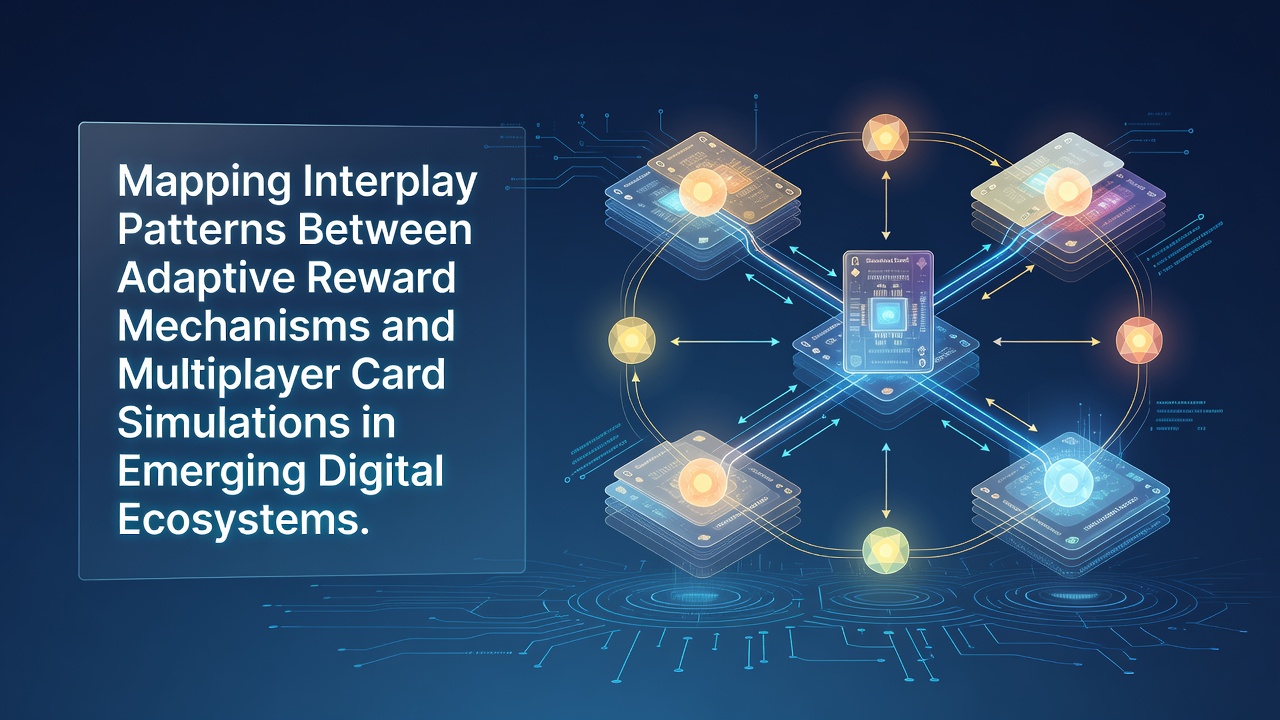
Digital ecosystems continue to expand with platforms that integrate adaptive reward systems alongside simulated multiplayer card environments, and researchers track the resulting interaction patterns through layered data models that capture player progression alongside simulation variables. These models combine behavioral metrics from reward adjustments with structural elements from card-based interactions, which allows analysts to identify feedback loops that influence engagement levels across distributed user bases. In July 2026 several research consortia released updated datasets that highlight shifts in how these components align within mobile and cloud-hosted frameworks.
Core Components of Adaptive Reward Mechanisms
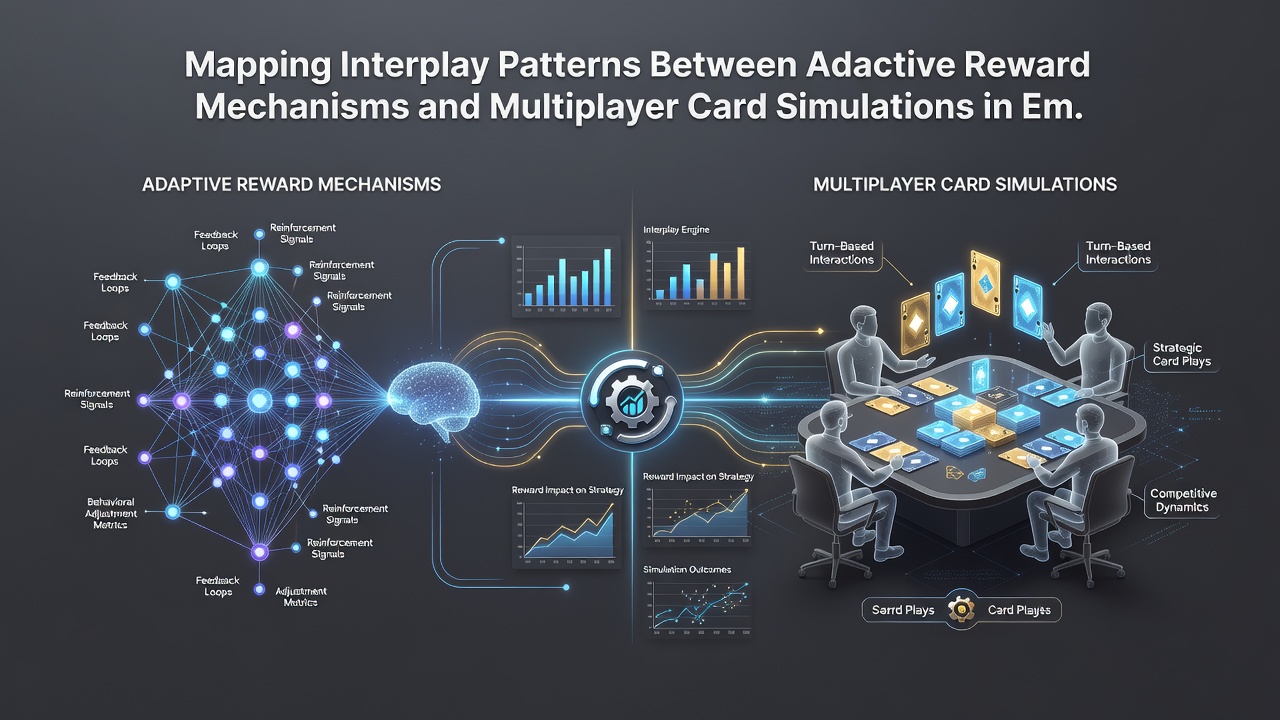
Adaptive reward mechanisms rely on algorithms that modify incentive structures based on real-time user data, and these systems draw from machine learning techniques to recalibrate point allocations or unlock sequences as participation metrics evolve. Studies conducted by academic teams at institutions across North America and Europe demonstrate that such mechanisms often incorporate reinforcement learning modules which process inputs like session duration and interaction frequency, whereas static reward models remain fixed regardless of behavioral changes. Observers note that the interplay becomes evident when reward scaling directly affects decision trees within card simulations, creating measurable divergences in strategy adoption rates among participant groups.
Structure of Multiplayer Card Simulations
Multiplayer card simulations replicate turn-based and probabilistic elements of traditional card formats inside scalable digital environments, and developers implement these through server architectures that synchronize state changes across simultaneous connections while maintaining consistent rule enforcement. Data from industry reports indicate that simulation engines frequently employ procedural generation for deck variations and opponent modeling, which introduces variability that adaptive rewards must then accommodate through dynamic balancing. Those who examine these systems find that synchronization protocols play a central role in preserving fairness, particularly when reward mechanisms attempt to offset perceived imbalances in card draw probabilities or table positioning advantages.
Techniques for Mapping Interplay Patterns
Mapping techniques combine graph theory with temporal sequence analysis to visualize connections between reward triggers and simulation outcomes, and practitioners apply network analysis tools to detect clusters where adaptive changes correlate with shifts in player retention or strategy complexity. According to findings published through the Association for Computing Machinery digital library, pattern detection improves when datasets include both micro-level action logs and macro-level ecosystem metrics, allowing identification of threshold points at which reward adaptations produce cascading effects on simulation stability. Researchers further refine these maps by layering heatmaps of engagement density over simulation flow diagrams, which reveals regions where feedback intensifies or dissipates depending on concurrent player density.
Developments Observed in Mid-2026
Platform operators across Asia-Pacific regions reported expanded testing of hybrid environments in which reward adaptation modules interface directly with card simulation engines, and preliminary figures released during July 2026 showed increased session continuity when adaptation rates aligned closely with simulation variance thresholds. Government-backed innovation programs in Canada and Australia have funded additional mapping projects that examine cross-platform data portability, enabling researchers to compare interplay patterns between console-based and browser-delivered instances. These efforts rely on standardized logging formats that capture both reward state transitions and card event sequences, which facilitates comparative studies across different ecosystem scales.
Analytical Challenges and Emerging Solutions
Analysts encounter difficulties when high-dimensional data streams from adaptive systems overlap with stochastic elements inherent in card simulations, and solutions include dimensionality reduction methods alongside ensemble modeling approaches that isolate primary interaction vectors. Reports from the European Commission digital strategy archives describe ongoing work on interoperability standards that would allow consistent mapping across proprietary platforms, reducing fragmentation in pattern recognition outputs. Teams working on these standards emphasize modular architectures that separate reward logic from simulation cores, thereby simplifying the extraction of interplay signatures without compromising runtime performance.
Conclusion
Mapping interplay patterns between adaptive reward mechanisms and multiplayer card simulations provides structured insight into how digital ecosystems evolve under combined incentive and interaction pressures, and continued refinement of analytical tools supports more precise forecasting of system behavior across expanding user networks. Data releases scheduled through late 2026 are expected to supply additional longitudinal records that further clarify these relationships within diverse deployment contexts.