26 Aug 2026
Adaptive Bonus Structures in Mobile Poker: Progressive Jackpots and Live Dealer Integration

Platforms on portable devices now route players through layered incentive systems that tie accumulating prize pools directly to ongoing table sessions with human dealers, and this approach has expanded steadily through 2026 as operators refine the underlying code to respond to individual session patterns in real time.
Core Mechanics of the Integration
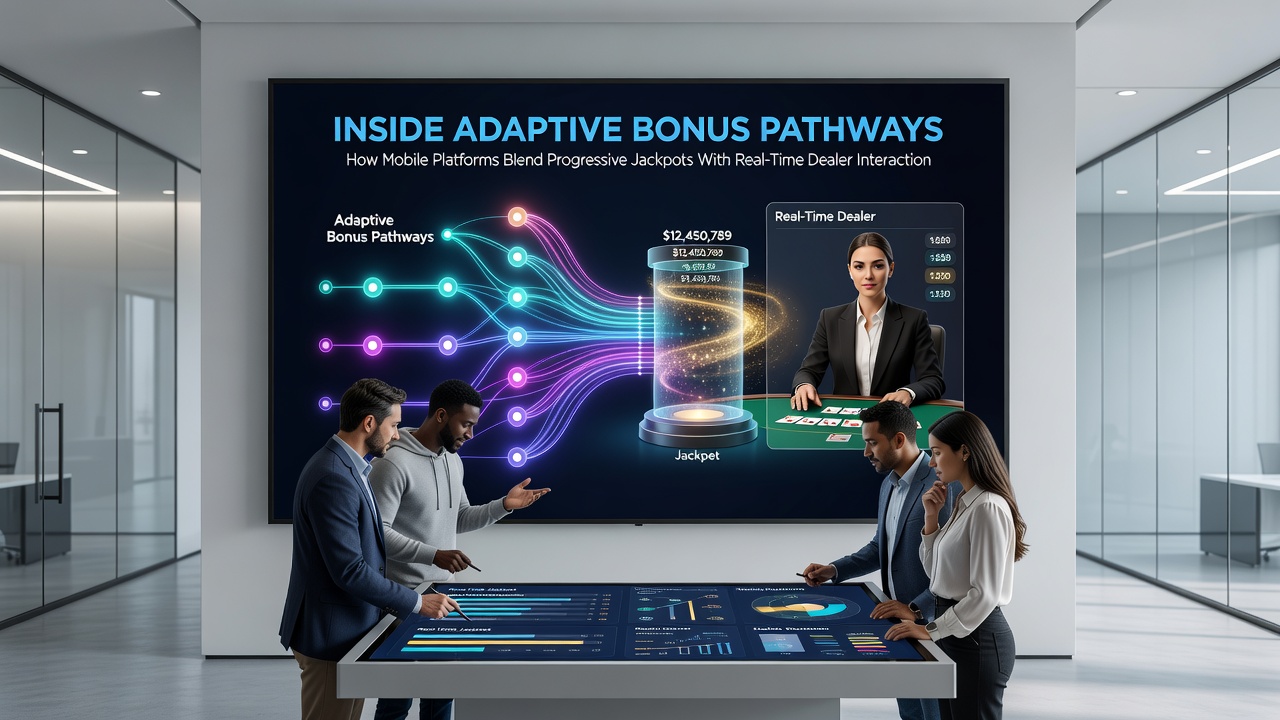
Developers link progressive jackpot meters to live poker variants by monitoring bet frequency, hand outcomes, and session duration, then adjusting bonus eligibility without interrupting the dealer feed. Data from multiple markets shows that such pathways often activate after a set number of consecutive hands or when a player reaches a threshold contribution to the shared pool, at which point the system offers scaled multipliers that apply to the next qualifying round.
Operators maintain separate ledgers for the jackpot seed and the live table rake, yet the same mobile application layer displays both figures to the user. Research indicates this dual visibility encourages continued participation because the visible growth in the progressive total appears alongside the active dealer interaction, creating a continuous visual cue that updates every few seconds.
Regional Deployment Patterns in Mid-2026
By August 2026 several North American and Asian markets had rolled out updated versions of these combined systems. Figures from the Ontario Lottery and Gaming Corporation reveal that handheld poker traffic carrying progressive elements rose 18 percent year-over-year, with the largest share occurring during evening peak hours when live dealer tables remain fully staffed. Similar patterns appear in reports issued by the Victorian Commission for Gambling and Liquor Regulation, where operators noted that players who engaged with adaptive bonus prompts completed 22 percent more hands per session than those using static reward menus.
These systems rely on low-latency streaming protocols that keep the dealer video synchronized with the backend bonus engine, and observers note that packet-loss mitigation routines prevent the jackpot counter from freezing even during brief network interruptions.
Technical Architecture Behind the Pathways
Engineers segment the player experience into three parallel streams: the video feed from the studio, the game-state engine that resolves each hand, and the bonus ledger that tracks progressive contributions. When a hand concludes, the system writes the contribution amount to both the jackpot pool and the player-specific incentive record within the same database transaction, ensuring atomic updates that reduce the chance of mismatched totals.
Adaptive triggers often incorporate machine-learning models trained on historical session data, and these models recalculate eligibility every 30 seconds. According to documentation released by the International Association of Gaming Regulators, the models weigh factors such as average bet size relative to table minimums and the interval between hands, then surface the next available bonus step without requiring the player to leave the live table view.
Player Retention Data and Retention Tactics
Industry reports compiled through the first half of 2026 show that platforms employing these blended pathways recorded higher repeat-visit rates across tested cohorts. One study released by the National Council on Problem Gambling tracked anonymized mobile identifiers and found that sessions incorporating both progressive meters and live dealer elements averaged 47 minutes, compared with 31 minutes for sessions limited to either feature alone.
Retention tactics include timed pop-ups that appear only after a player has contributed a minimum amount to the progressive pool, at which point the interface highlights the next multiplier level available on the current table. These prompts remain non-intrusive, fading after five seconds unless the user interacts with them, and they link directly to the rules panel rather than forcing an immediate commitment.
Regulatory Oversight and Compliance Updates
Regulators in multiple jurisdictions require operators to maintain transparent audit logs that separate jackpot contributions from table rake, and they mandate that any adaptive bonus calculation remain verifiable by third-party testing laboratories. In August 2026 the Massachusetts Gaming Commission updated its technical standards to require real-time export of bonus pathway logs, ensuring that progressive totals and live-hand outcomes can be reconciled within 60 seconds of each hand closure.
These requirements have prompted further investment in immutable ledger technology, allowing both regulators and operators to verify that bonus triggers operated exactly as described in the published rules for each variant.
Conclusion
Mobile platforms continue to refine the technical and operational links between progressive accumulations and live dealer poker, with deployment data from multiple regions confirming measurable increases in session length and repeat engagement through the middle of 2026. The underlying architecture relies on synchronized data streams and adaptive eligibility models that update without disrupting the dealer interaction, while regulatory frameworks keep pace by demanding transparent, auditable records of every contribution and trigger event.